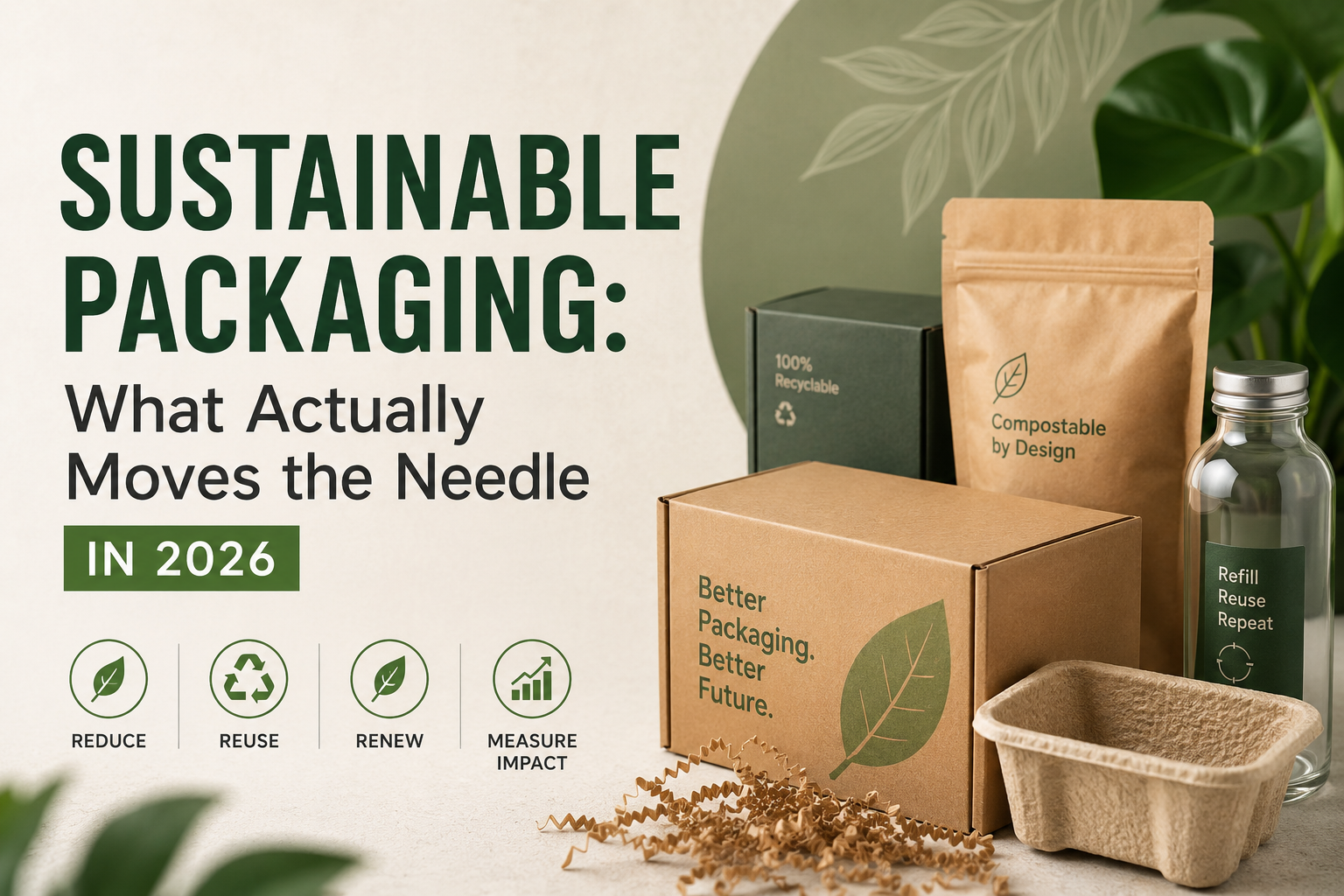
Sustainability in packaging has moved well past slogans. A decade ago a recycling symbol on the box was enough to satisfy most buyers. Today, procurement teams ask for recycled-content percentages, certification numbers and end-of-life data, and consumers increasingly notice the difference between genuine improvement and greenwashing. The good news is that the changes with the biggest environmental impact are usually the same ones that reduce cost. This is a practical look at where the real gains are in 2025 — and where effort is being wasted.
Right-size before you do anything else
The single greenest change most businesses can make is also the most overlooked: use less box. Oversized cartons filled with void material waste board, waste the fuel that carries the empty space, and waste warehouse room. When you trim a carton to fit the product, you cut material at the source, fit more units on every pallet and truck, and reduce the protective filler needed to stop movement inside. A right-sizing audit across a product range routinely removes a measurable share of total packaging weight before a single material is swapped. Less material, less freight, lower emissions — and a smaller bill. It is the rare sustainability move that pays for itself immediately.
Recycled content that holds up
Corrugated board is already one of the most recycled materials in the world, but not all recycled content is equal. High recycled-content kraft liners keep a box fully repulpable at end of life while maintaining the strength your product needs. The craft is in matching recycled liners to the right flute and wall so performance does not drop — a poorly specified recycled board that fails in transit causes far more waste through damage than the virgin board it replaced. Work with a manufacturer who can show you tested strength figures for their recycled grades, not just a percentage on paper.
Switch to water-based and soy inks
Print is where a lot of hidden environmental cost lives. Traditional solvent-based inks release volatile compounds and can complicate recycling. Water-based and soy-based ink systems print cleanly on kraft, hold colour well for retail shelves, and keep the finished box easy to repulp. For most corrugated applications the switch is straightforward and does not compromise the look of the packaging. If your boxes carry branding, ask whether your current ink system is helping or hurting the recyclability you are claiming.
Design for a single material stream
Recyclability is decided at the design stage, not at the bin. A box that mixes materials — plastic windows, foil lamination, heavy tape, glued-on foam — forces the customer to separate components that rarely get separated, so the whole thing often ends up in landfill. A mono-material design, where the box and its inserts are all paper-based and repulpable together, dramatically increases the share that actually gets recycled. Replace plastic void fill with moulded pulp or corrugated inserts. Swap foil lamination for printed effects where presentation allows. Every component you keep in one material stream is one the recycler can actually process.
Reusable and returnable systems
For closed-loop supply chains — deliveries between your own sites, or to regular business customers — reusable packaging can outperform single-use on both cost and footprint over its lifetime. Sturdy returnable containers and heavy-duty corrugated totes designed for multiple trips spread their manufacturing impact across dozens of uses. The model only works where you control the loop and can guarantee returns, but where it fits, it is one of the most effective sustainability strategies available.
Certifications buyers actually trust
If you make environmental claims, be ready to back them. Recognised certifications give your customers confidence that the claim is real rather than marketing. FSC certification shows the fibre comes from responsibly managed forests. ISO 14001 demonstrates an environmental management system behind the operation. Clear recycled-content figures, stated honestly, matter more than a vague "eco-friendly" label that means nothing on inspection. Specific, verifiable claims build trust; broad, unprovable ones increasingly invite scrutiny and damage credibility.
Beware the trade-offs that backfire
Not every "green" swap is actually greener, and this is where good intentions often go wrong. A flashy biodegradable plastic alternative may need industrial composting facilities your customers do not have access to, meaning it behaves like ordinary plastic in practice. An under-specified lightweight box that fails and causes a damaged shipment generates far more waste — and a replacement shipment — than the slightly heavier box that would have arrived intact. Sustainability has to be measured across the whole life cycle, including the damage and returns it prevents, not judged on a single attribute in isolation. The most sustainable package is the one that does its job with the least material and gets recycled at the end.
The cost and sustainability link
The reason sustainable packaging has accelerated is not only regulation or consumer pressure — it is that the leading moves save money. Using less board lowers material spend and freight. Right-sizing fits more units per truck. Consolidating to a single recyclable material stream simplifies sourcing and reduces complexity on the line. This alignment is what turns sustainability from a cost centre into an operational improvement, and it is why the businesses making the fastest progress are often doing so for hard commercial reasons as much as environmental ones. When a change cuts both your bill and your footprint, the decision makes itself.
Measure, then improve
You cannot manage what you do not measure, and vague intentions rarely survive contact with a purchasing decision. Start by quantifying your current position: the total weight of packaging per shipment, the recycled-content percentage of your boards, the share of your packaging that is genuinely recyclable in your customers' waste streams, and the damage rate that drives replacement shipments. With real numbers, you can target the changes that move the needle most and prove the improvement afterwards. Honest measurement also protects you from greenwashing claims you cannot substantiate, which matter more every year as scrutiny tightens. Set a baseline, pick two or three concrete targets, and review them on a schedule.
Bring customers and suppliers along
Packaging sustainability is a shared effort. Your manufacturer can recommend recycled grades and recyclable structures, but the gains stick only when your own teams and your customers understand them. Tell customers, briefly and honestly, how to recycle the pack — a simple instruction noticeably increases the share that actually gets recycled. Work with your supplier on a roadmap rather than a one-off switch, so improvements compound as new grades and methods become available. The most durable progress comes from treating sustainability as an ongoing relationship across the supply chain, not a single box specification signed off once and forgotten.
How to start
You do not need to overhaul everything at once. Begin with an honest audit of your current packaging: where is board being wasted on oversized cartons, where could recycled liners replace virgin board without losing strength, and where are mixed materials blocking recyclability? Prioritise the changes that cut cost and footprint together — right-sizing and material consolidation almost always top that list — and build certification and reusable systems in over time. We help clients run exactly this kind of audit, identifying the specific changes that reduce both spend and environmental impact without compromising the protection their products depend on. In 2025, the brands making real progress are not the ones with the loudest claims; they are the ones quietly using less, choosing better materials, and proving it.