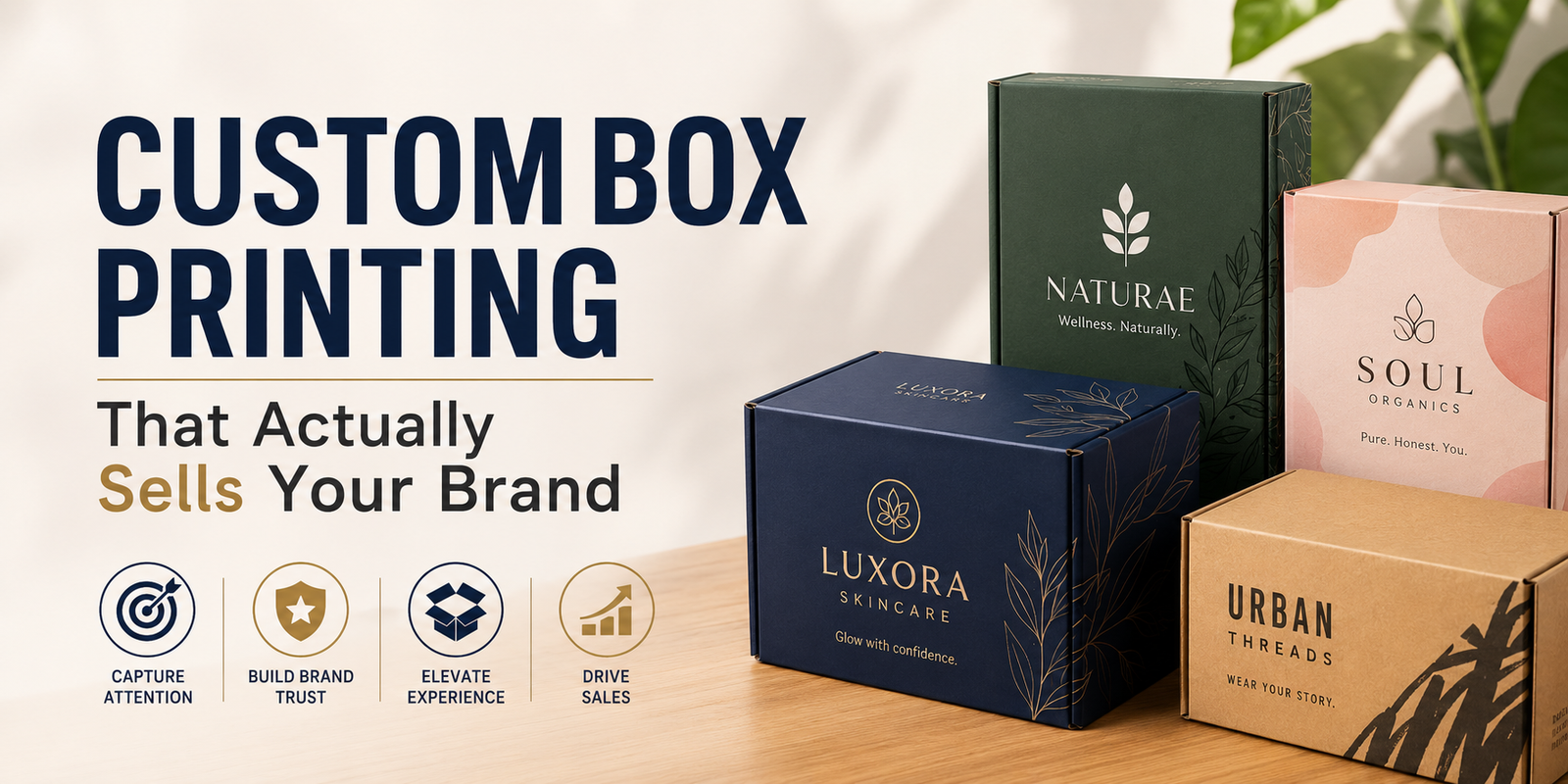
Your box is the first physical thing a customer touches from your brand, and often the only one they photograph and share. Good printing turns a plain shipping carton into a brand experience — and, increasingly, into free advertising every time someone posts an unboxing. But custom printing spans a wide range of methods and costs, and spending in the wrong place is easy. This guide explains the main print methods, when each is worth it, and how to get artwork that reproduces beautifully on corrugated board.
Why the box is worth the investment
Packaging does marketing work that nothing else in your budget can match. It reaches the customer at the moment of highest excitement — delivery — and a well-designed box raises perceived value before the product is even revealed. For e-commerce brands especially, the unboxing moment has become a genuine acquisition channel: customers share striking packaging on social media, putting your brand in front of new audiences at no media cost. Even for plain business shipments, a clean, professionally printed box signals competence and care. The question is rarely whether to print, but how much finish the product and channel justify.
Flexographic printing: fast and economical
Flexography prints ink directly onto the corrugated board using flexible plates, and it is the workhorse of the industry. It excels at one to three colour designs — logos, brand names, simple graphics and handling marks — printed straight onto kraft or white liner. The strengths are speed and cost: once plates are made, flexo runs quickly and cheaply at volume, which makes it ideal for shipping cartons, mailer boxes and any packaging where the goal is clear branding rather than photographic detail. The trade-off is resolution. Flexo handles solid colours and bold artwork well but struggles with fine gradients, photographic images and very intricate detail. For most outer shipping boxes, that limitation simply does not matter.
Litho-lamination: premium, photographic quality
When the box itself is the retail face of the product — on a shelf, in a gift, in a premium unboxing — litho-lamination delivers a different class of finish. A high-resolution image is printed offset onto a paper sheet, then laminated onto the corrugated board. The result is photographic colour, fine detail and a smooth, premium surface that flexo cannot reach. This is the method behind eye-catching retail packaging, electronics boxes and luxury gift cartons. It costs more and suits larger runs better, but for products where shelf presence and perceived value drive the sale, it pays for itself in how the package makes the product look.
Digital printing: short runs and personalisation
Digital corrugated printing has matured into a strong option for shorter runs, fast turnarounds and variable designs. Because it needs no printing plates, it removes the setup cost that makes flexo and litho uneconomical at low volumes. That makes it ideal for seasonal packaging, limited editions, regional variants, product testing and any situation where you want high-quality print without committing to a large quantity. As volumes rise, plate-based methods usually become more cost-effective per unit, so digital is best thought of as the answer to "I need great print, but not tens of thousands of them."
Finishing touches that lift perceived value
Beyond the base print, finishing options change how premium a box feels in the hand. A matte or gloss coating protects the print and sets a tone — matte reads understated and modern, gloss reads vivid and energetic. Spot UV adds shine to selected areas like a logo for contrast against a matte background. Foil stamping and embossing add tactile, metallic or raised detail that signals luxury instantly. These touches add cost, so reserve them for the packaging that faces the customer directly and where the lift in perceived value justifies the spend.
Getting artwork right for corrugated
Even the best print method fails with poorly prepared artwork, and corrugated board has quirks worth respecting. Supply files in vector format wherever possible, set up in CMYK rather than screen RGB so colours reproduce as expected. Use brand colours specified as exact references so they stay consistent across production runs. Keep critical text and logos away from fold and crease lines, where ink can crack or distort. On flexo especially, avoid relying on fine gradients and tiny text. A short conversation with your manufacturer's pre-press team before you finalise artwork prevents the most common and costly reprints.
The unboxing as a marketing channel
It is worth dwelling on just how much reach a well-designed box now has. Every unboxing photo or video a customer shares puts your packaging — and your brand — in front of an audience you did not pay to reach. For direct-to-consumer brands this has quietly become one of the highest-return touchpoints in the entire customer journey, because it converts the moment of peak excitement into content. Designing the inside of the box, not just the outside — a printed inner, a considered reveal, a thank-you message — turns a routine delivery into something worth showing. Even practical details such as easy-open tabs, a resealable closure for returns and clear orientation quietly raise satisfaction and cost little to design in from the start. You are not just protecting a product; you are staging a moment.
Common printing mistakes to avoid
A few avoidable errors account for most disappointing print results. Designing in screen RGB and only converting to CMYK at the end produces colours that shift unexpectedly in production. Placing fine text or logos across a crease invites cracking and distortion. Expecting flexography to reproduce photographic gradients leads to muddy results that litho-lamination would have handled cleanly. And specifying brand colours loosely, without exact references, causes drift between runs that erodes brand consistency over time. Each of these is easy to prevent with a short pre-press review before the run — and expensive to fix once thousands of boxes carry the mistake.
Planning your print run
Print economics turn heavily on volume, so plan quantities deliberately rather than reactively. Plate-based methods carry a setup cost that is recovered over the run, which makes them cheaper per unit at scale but poor value for small batches; digital reverses that trade-off entirely. If you expect to reorder a design repeatedly through the year, plate methods usually win over time. If you are testing a design, running a seasonal variant or personalising packaging, digital avoids paying for plates you will use once. Forecasting your real annual volume per design lets you pick the method that minimises cost across the whole year rather than just the next order, and it keeps your branding consistent as you scale.
Matching method to product
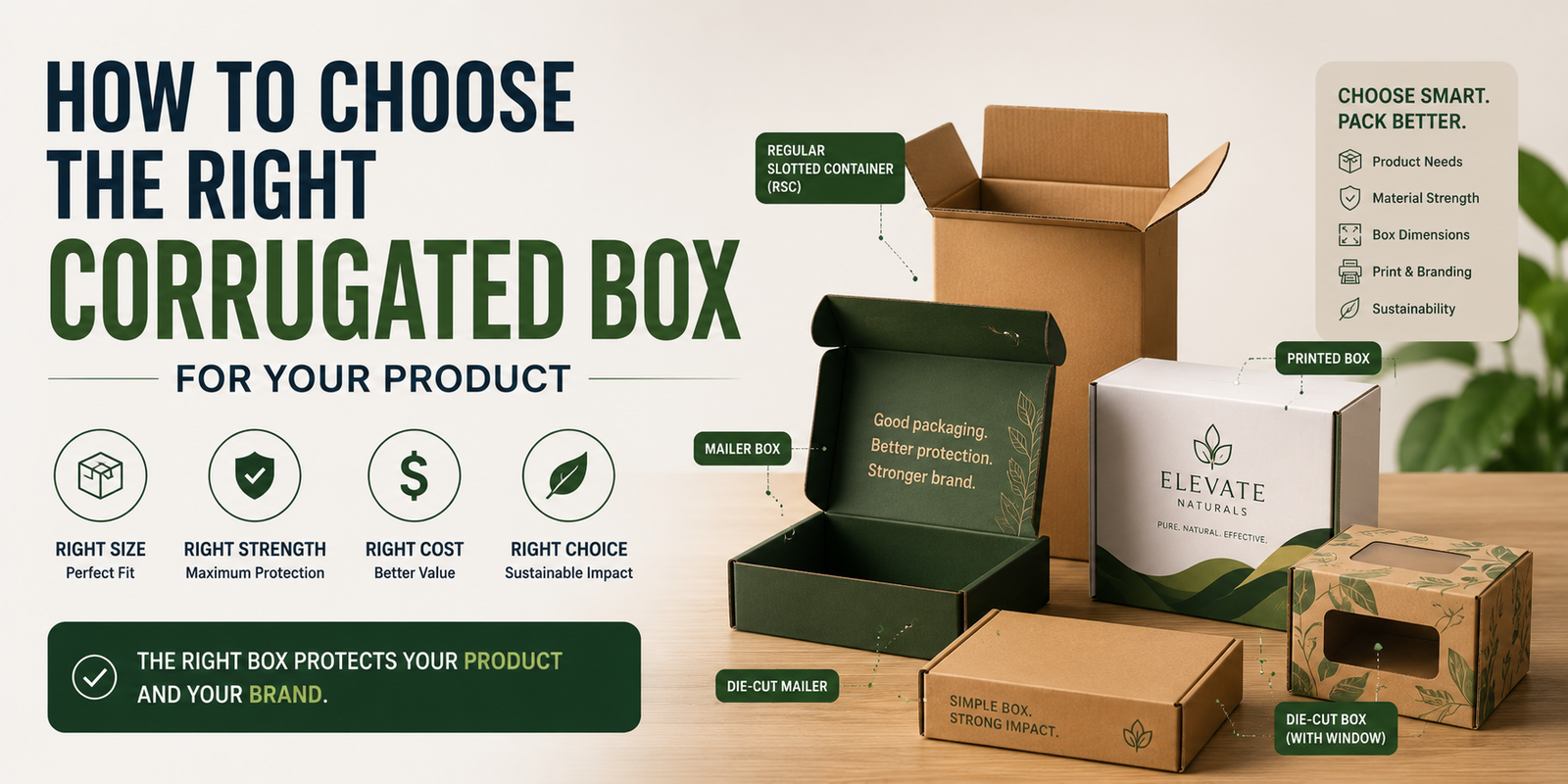
The right choice comes down to where the box lives and what it sells. For plain outer shippers and high-volume cartons, flexo gives clear branding at the lowest cost. For retail-facing or premium products where the box drives the sale, litho-lamination earns its premium. For short runs, seasonal designs and personalisation, digital removes the setup barrier. Many brands use a mix — economical flexo on the outer shipper, a richly printed inner box for the unboxing reveal. Share your artwork, your quantities and where the box will be seen, and we will recommend the print method and finish that fit your budget and make your brand look the way it deserves to.